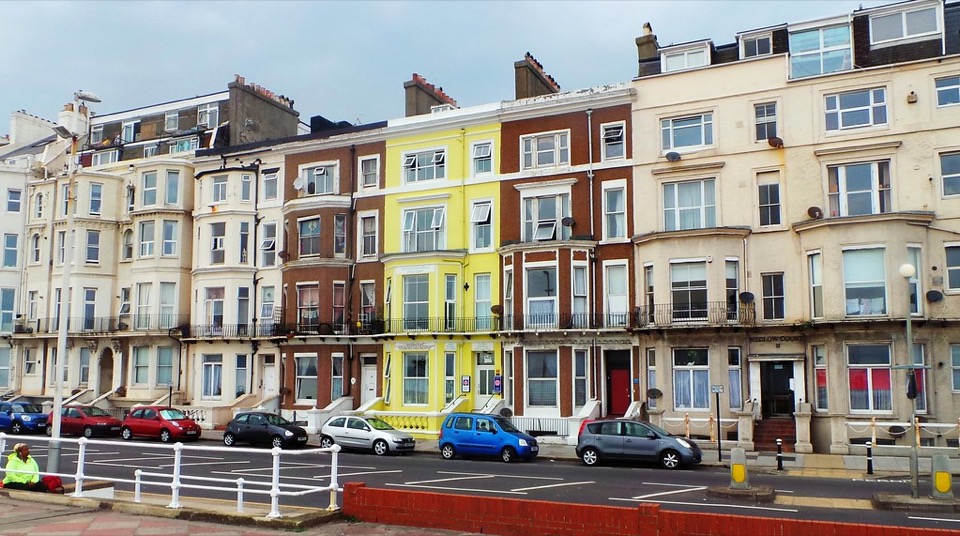
A rules check for your address
We check the planning rules against your actual roof, wall or garden before anyone gives you a price, including the wooden wall and balcony rule that came in on 27 August 2026.
Read the questions on thisPick your region and where the panel would go, and the calculator shows what an 800 watt device would generate in a year, using published data from the European Commission's PVGIS. If the figure looks worth it, send us your postcode and we'll supply and fit one.
Generation from PVGIS, the European Commission’s Photovoltaic Geographical Information System, for an 800 watt device with 14 per cent system losses, queried 13 September 2026. One representative point per region, unshaded. A ceiling under ideal conditions, not a forecast for your particular wall, and not the same thing as a saving: this figure is generation in kWh, and the calculator does not turn it into a price because no UK installed cost or tariff is sourced.
Your region, your name and email, and the spot you have in mind. We confirm the figure for your actual location, check the rules for that spot, and say what fitting would involve.
We reply by email. Your details stay with us and nobody pays us commission.
All four figures below are for the same point and the same 800 watt device. Moving it from a wall to open ground makes more difference than moving house.
West Midlands shown here as one worked example. PVGIS, four mountings, 0.8 kWp with 14 per cent system losses, unshaded, queried 13 September 2026. Use the calculator above for your own region.
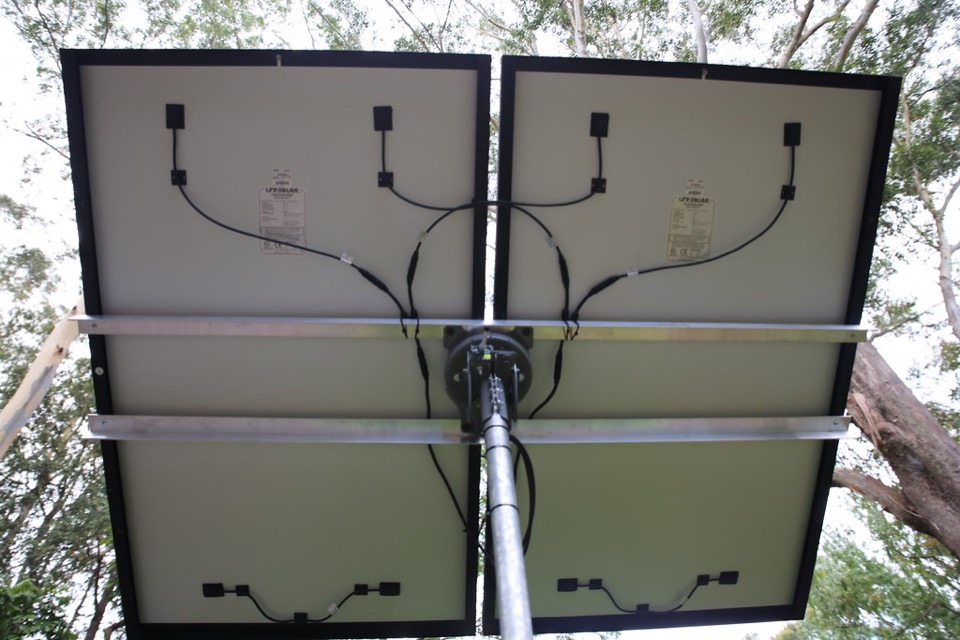
Once you have a figure you are happy with, this is what happens next.
We check the planning rules against your actual roof, wall or garden before anyone gives you a price, including the wooden wall and balcony rule that came in on 27 August 2026.
Read the questions on this
You can plug a compliant device in yourself. Where a weatherproof outdoor socket or circuit work is needed, we get a local electrician to quote for it.
Read the questions on this
Great Britain asks you to register the device with your distribution network operator within 28 days. We fill the short form in with you.
Read the questions on thisImportant if you are thinking about a balcony
The permitted development right for solar equipment was rewritten on 27 August 2026, the same day the underlying regulations came into force. Houses and blocks of flats are treated the same way: a panel fixed to a wooden wall, a balcony or timber cladding sits outside the right now. There is a 12 month window running to 27 August 2027, and until then either the old rules or the new ones can be relied on.
Almost every plug-in kit on sale is sold as balcony solar. If your balcony or your wall is timber, the permitted development right does not cover it there, and a planning application for a device this size is rarely worth the cost. Wales and Scotland run their own separate rules, and neither one names plug-in solar or timber specifically yet.
Source: the Planning Portal’s guidance on solar equipment for houses and blocks of flats, consulted 13 September 2026.
The calculator is built to be checked, not to be flattering. Here is exactly what it leaves out.
Each region is modelled at a single representative city. A coastal spot and an inland one in the same region are not identical, and neither is yours.
The figure assumes nothing blocks the sun at any time of day. A tree, a chimney or next door’s extension will take a real bite out of it.
These are ideal conditions at the stated angle and direction. Treat the number as the most you could expect, not a promise for your address.
What you save depends on how much you use at the moment the panel is generating. There is no price or saving figure on this site because no UK cost is sourced.
None of the figures we have seen for either the kit or the electricity are ones we would put our name to. A saving also depends on your own electricity use at the moment the panel generates. We show generation in kWh instead, because that is the one figure with a named, checkable source.
One per household is the real limit. The specification on its own would allow one per final ring circuit, but the network rules are tighter: Engineering Recommendation G98 Issue 2 Amendment 1 caps every home at one device.
No. Batteries sit outside the interim product specification altogether, whether as a standalone unit or built into the device itself. A kit that bundles one in falls outside what was actually approved that August.

Tell us your region, your postcode and where you have in mind. We confirm the figure for your actual address, check the rules that apply there, and say what fitting would involve. If it plainly is not going to work at your address, that is what we will tell you.
Get a quote for my address